A Designer’s Take on the Nurse Educated SVG Design
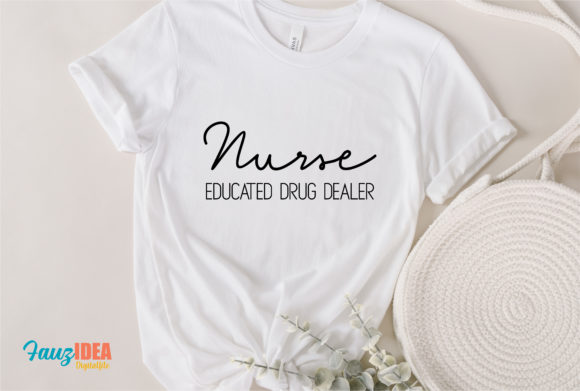
As a designer who spends more time in front of an embroidery machine than a sketchpad, I’ve learned to look at digital files with a practical eye. It’s not just about whether a design is cute or clever; it’s about whether it translates into a beautiful, durable finished product. Today, I’m looking at the “Nurse Educated Drug Dealer” SVG design from that exact perspective. Let’s unpack how this graphic might perform in real-life embroidery work for clients, gifts, or shop merchandise.
The First Impression: Theme, Tone, and Application
First things first: the theme is bold and carries a very specific, tongue-in-cheek personality. It’s not a generic floral motif. This design creates a mood of playful irreverence, aimed at a niche audience who’ll appreciate the humor—likely nurses, medical students, or their friends and family. The layout, assuming it’s text-based with potential illustrative elements, suggests a straightforward application. For embroidery, this means the visual personality is driven by the message itself, so stitch clarity and readability become paramount.
This design naturally belongs to projects where that personality is a feature. Think custom apparel for a nurse’s birthday, a witty tote bag for a nursing student, or an apron for a healthcare worker with a great sense of humor. It feels suited for personalized gifts rather than mass-market, anonymous products.
Real-World Embroidery Performance: Where It Works Brilliantly
In practical use, this design’s strength lies in its defined theme. For an embroidered sweatshirt or a sturdy cotton tote bag, a clean, well-digitized version of this file would stitch out crisply. The contrast between text and any potential graphic elements can create a focal point that doesn’t require overly complex stitch work. It could be excellent for a dense fill stitch on a patch, applied to a backpack or a cap, making a statement piece.
For small business owners and Etsy sellers, this falls into the category of “niche merchandise.” It could perform well as an embroidered pillow cover in a nurse’s lounge or a custom tea towel in a kitchen that loves medical humor. As a boutique product, it offers specificity, which can actually boost buyer engagement for a targeted customer. In printable mockups for digital product sellers, it presents a clear, sellable concept.
Where Extra Care is Needed in Stitching
However, the bold theme demands careful execution. On small hoop sizes, any intricate details or small lettering within the design could lose clarity. I’d be cautious stitching this on textured fabrics like some sweaters, or stretchy fabrics like certain t-shirts, without rigorous stabilizer use, as the text could distort. Dark fabric backgrounds would require impeccable thread color contrast planning—a white or bright satin stitch might be essential.
Embroidering on curved surfaces like caps requires checking how the design’s layout accommodates the curve. Detailed corners and dense stitch areas need to be tested to prevent puckering. And crucially, for products meant for frequent washing—like baby clothes (though the theme likely isn’t for babies) or kitchen linens—the stitch density and stability must be high to ensure the joke lasts as long as the product.
Impact on Value, Trust, and Presentation
From a professional standpoint, how you execute this embroidery file directly affects perceived value. A poorly stitched, fraying version on a cheap sweatshirt undermines the design’s wit. A crisp, clean embroidery on a quality canvas tote elevates it into a desirable, handmade gift. For craft businesses, this consistency builds customer trust; they come back for the quality, not just the joke.
The design’s very specific nature impacts giftability and recognition. It’s a perfect gift for a specific person, enhancing its perceived thoughtfulness. For brand consistency, if your shop specializes in medical humor or niche apparel, this design fits like a glove. If your brand is broader, it becomes a standout item that attracts a particular community.
Practical Notes for the Embroidery Designer
Before you hoope up your best sweatshirt, here’s my standard advice. Always test this embroidery design on scrap fabric first. Use the same texture and weight as your final project. Check thread color contrast meticulously—view it in black and white mockups to see if the values separate well. Compare how it looks on light and dark fabric backgrounds digitally before committing thread.
Review the stitch density in your machine software. Confirm your intended hoop size can accommodate the design without compromising small details. Inspect any tiny elements; if they’re too fine, consider a slight redesign or opting for a larger application. Use a proper stabilizer for the fabric type; this is non-negotiable for text clarity.
Finally, a crucial step: check the provided licensing terms before selling finished items or digital products. The description mentions it’s for printing, cutting, and designing on mugs, shirts, decals, and more, but confirm explicitly if commercial use is permitted. Never assume.
The Final Stitch: A Design with Clear Purpose
The “Nurse Educated Drug Dealer” SVG design is a graphics file with a strong, pointed personality. In the crafts and embroidery world, its value isn’t in universal appeal but in perfect application. For the right project—a custom embroidered hoodie for a nurse, a witty patch for a medical student’s bag—it can be a winner. Its success hinges entirely on the embroiderer’s skill and preparation: testing, stabilizing, and choosing the right product canvas.
It reminds us that in machine embroidery, the file is just the blueprint. The real artistry is in how we translate it into thread and fabric, considering how every satin stitch and fill stitch will be received by the person who finally wears, uses, or gifts that finished product. Approach it with a practical, confident hand, and this design can stitch out into something both humorous and professionally crafted.